
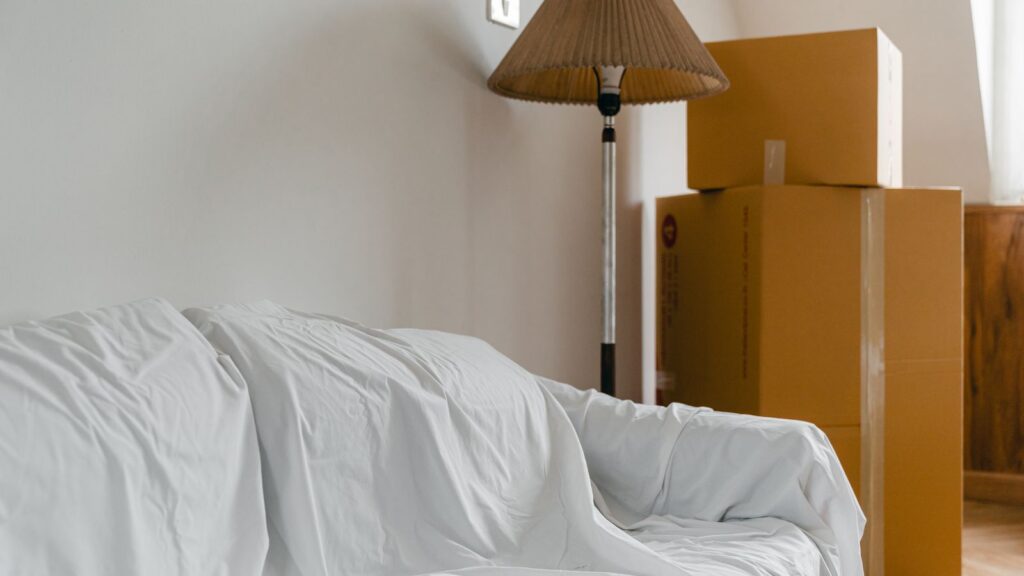
This is what “we’ve outgrown it” actually looks like.
It’s not a sign in the yard. It’s not a late-night Zillow scroll.
It’s the stroller parked behind the front door because there’s nowhere else for it to live.
It’s the dining table that hasn’t seen a meal in a year because it’s the craft station, the homework spot, and the folding pile all at once.
It’s one shoe. Always one. Never the pair.
Nobody outgrows a house in one dramatic moment
That’s the part that keeps people stuck.
If the roof caved in, you’d move. If the foundation split, you’d move. Instead the house just quietly shrinks around you, one bin at a time, until you’re stepping over things without noticing you’re stepping.
There’s no alarm. There’s just a Tuesday where you stand in the kitchen and think, we can’t keep doing this, and then somebody needs a snack and the thought goes away for another six months.
I see it every week in Lincoln. Good families in perfectly good starter homes near Trendwood, off 84th and Old Cheney, tucked into the older streets around the LSE zone. Homes that made total sense five years ago and make almost none now.
The walkthrough you already know by heart
You don’t need me to describe your house. But here’s what I see when I walk one of these:
- The entry. Coat hooks doing the work of a mudroom. Backpacks on the floor because the hooks lost.
- The “office.” Which is a desk in a bedroom corner, and the bedroom belongs to someone who does not care about your Zoom call.
- The basement. Half storage, half play space, all of it slightly damp in the spring. You stopped going down there except to move the dehumidifier hose.
- The garage. One car fits. Barely. The other side is the overflow room the house never had.
- The spare room. There is no spare room. There hasn’t been for years.
That’s not a mess. That’s a house telling you it’s done.
Why most people sit in it for years anyway
Because the exit looks harder than the problem.
You can’t buy until you sell. You can’t sell until the carpet and the paint and the bathroom get handled. You can’t handle the carpet and the paint while four people are living on it. And even if you pulled all that off, where does everybody sleep between closings?
So you stay. You tell yourself next year. Next year you’ll be more organized, the kids will be easier, the timing will be cleaner.
Here’s what next year actually looks like. Prices in Lincoln keep climbing. The list of repairs gets longer, not shorter. The basement still smells like the basement. The kids are bigger and the house is exactly the same size.
Waiting isn’t neutral. It just charges you quietly.
The way out is a sequence, not a leap
The reason this feels impossible is that you’re picturing it as one giant simultaneous event. Sell, buy, fix, pack, move, all in the same week, with your job and your life still running.
It isn’t one event. It’s five steps in order. That’s The Move-Up Method, and it’s the same sequence I run every time.
- PLAN. We sit down with no pressure and no contract. We get honest about the real reason you want out, what the current house is worth prepped, and what the next one actually costs you month to month.
- PREP. This is HomePrep+. I front and project-manage the work that makes your house sell right: paint, carpet, cleanouts, deep clean, the roof if it needs it. You don’t write a check up front. You don’t live in a construction zone while it happens.
- SEARCH. We go find the next house on your criteria, not a general one. Four real bedrooms. A basement you’d actually let people sit in. Whether that’s Wilderness Hills, Stevens Creek, or the Pine Lake corridor.
- SELL. The current house goes to market prepped, which is the only version of it that gets what it’s worth.
- MOVING. The hardest week doesn’t land on you alone. We line up the logistics so it’s one move, not two, and not a rental in between.
You don’t have to fix it first
That’s the sentence most people in your spot have never heard. Every plan you’ve built in your head starts with “once we get the house fixed up,” and that’s exactly where it stalls.
That’s where I come in.
I don’t need your house to be ready. I need you to be willing to talk about what ready would take. That’s one conversation, not a commitment, and it’s the reason 100+ families have left me 5-star reviews on Google instead of a thank-you note for a yard sign.
The clutter isn’t the problem. It’s the receipt for a life that got bigger than the walls around it.
You didn’t fail at your starter home. You used it up. That’s what it was for.
If your family is feeling the squeeze of a house you’ve outgrown, this is the exact framework I walk Lincoln families through – selling, buying, prepping, and moving without the chaos: See how the Move-Up Method works →