
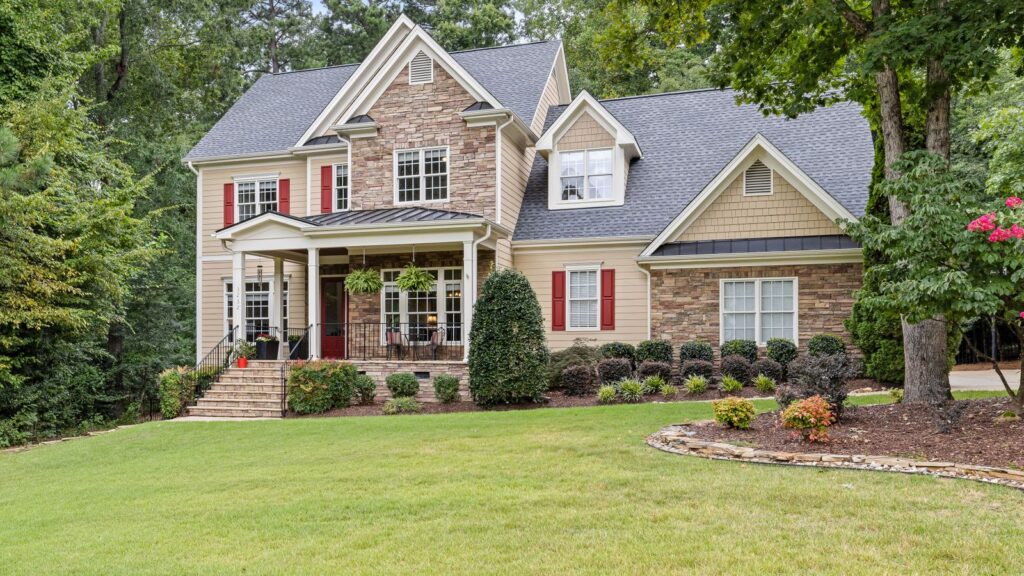
Buyers decide at the curb.
Not in the kitchen. Not in the bathroom you’ve been apologizing for since 2019. At the curb. In the car. Before anyone touches the lockbox.
I’ve ridden along for a lot of those drive-ups. You can feel the exact second it happens. The car slows, somebody looks up from their phone, and the mood shifts. Either they lean forward, or they start talking about the next house on the list.
That’s four seconds. That was your showing.
The showing starts before the showing
Your first photo online is the front of your house. That’s the thumbnail. That’s the one a buyer thumbs past at 10:40 at night while their partner is half asleep next to them.
If that photo reads “tired,” everything after it gets read as tired too. The updated kitchen becomes “well, the kitchen’s nice, but.” The finished basement becomes a maybe.
Curb appeal isn’t decoration. It’s the frame everything else gets judged inside.
What buyers actually see from the street
They are not appraising your roof. They’re reading signals. Fast ones.
- Dark, mossy shingles. Reads as “roof is coming out of my pocket.”
- Overgrown shrubs swallowing the front windows. Reads as “nobody’s kept up with this.”
- Peeling trim and a faded front door. Reads as deferred maintenance, everywhere, in every room.
- Cracked driveway, weeds in the seams. Reads as a project.
- Cloudy windows and dirty siding. Reads as older than it is.
- The trailer, the project car, the basketball hoop with no net. Reads as clutter before they see any clutter.
None of that means your house is bad. Most of it means you’ve been busy living in it. But a buyer doesn’t know you. They only know what the front yard told them.
Here’s what nobody tells you about deferred maintenance
Buyers don’t price the repair. They price the fear of the repair.
You know your gutters just need to be cleaned and re-hung. The buyer sees a stain on the fascia and mentally writes a much bigger number, because they don’t know where it stops. Then they subtract that number from your house and move on to the one in Wilderness Hills that looks handled.
That’s the part that costs you. Not the actual fix. The imagined one.
Why this is a PREP problem, not a weekend problem
I hear the same plan every week. “We’ll get to the outside this spring.”
Then spring shows up with baseball, work travel, and a kid who needs something every twelve minutes. The list doesn’t shrink. It just moves to next spring.
Meanwhile you’re stuck in the gap. You can’t buy until you sell. You can’t sell until it’s presentable. You can’t get it presentable while you’re living in it with a full calendar.
That’s where I come in.
PREP is step two of The Move-Up Method, and it’s the step most families never get past on their own. It’s why I built HomePrep+. I front the prep and project-manage it. Paint, carpet, cleanouts, deep clean, roof, the landscaping that’s been eating your front windows. You don’t write a check up front, and you don’t live inside a construction zone while three contractors argue about scheduling.
You get the punch list run for you. Not handed to you.
Where curb appeal sits in the whole sequence
The Move-Up Method runs in five steps, in this order, on purpose.
PLAN. We sit down, get the real why, map the financing and the timeline.
PREP. We fix what moves the needle and skip what doesn’t.
SEARCH. We find the next house on your criteria, whether that’s a real four bedroom in Stevens Creek or something closer to 84th and Old Cheney inside the LSE zone.
SELL. We list a prepped house, not an apologized-for one.
MOVING. We coordinate the hardest week so it isn’t sitting on your family alone.
One sequence. One move instead of two.
Fix what matters. Leave what doesn’t.
I’m not going to send you to a garden center to spend four Saturdays on mulch theater. Half the curb-appeal advice online is decorating advice dressed up as strategy.
In Lincoln, on a Trendwood ranch or a two-story in the Pine Lake corridor, the front-yard wins are usually boring and cheap to sequence: power wash, cut the bushes back hard, straighten the gutters, fresh paint on the door and trim, kill the weeds in the driveway seams, and get everything off the lawn that isn’t grass. Then a roof or a driveway conversation only if it’s actually scaring people.
That’s the judgment part. Knowing which one you’re looking at is most of the job, and after 100+ 5-star reviews I’ve gotten pretty good at calling it from the sidewalk.
Your house has one first impression, and it happens from the street with the engine still running. Make that four seconds work for you.
If your family is feeling the squeeze of a house you’ve outgrown, this is the exact framework I walk Lincoln families through – selling, buying, prepping, and moving without the chaos: See how the Move-Up Method works →