
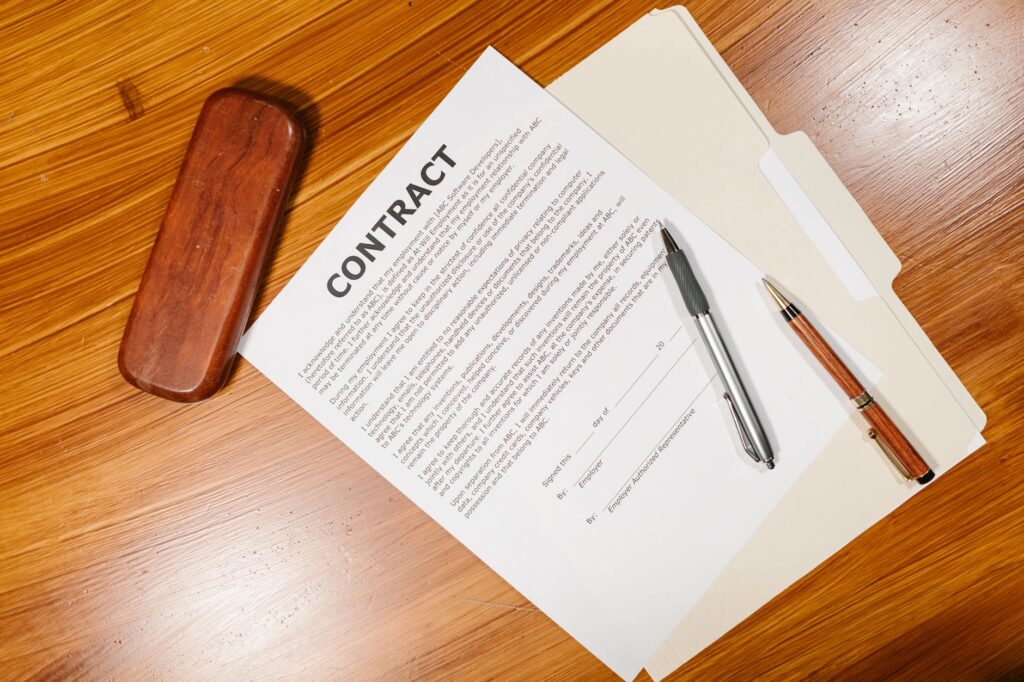
Every agent in Lincoln says they’re a strong negotiator.
Almost none of them can tell you what that means in a real deal.
Ask them. Watch what happens. You’ll get a shrug and a story about “I really fight for my clients.”
That’s not negotiation. That’s a slogan.
Negotiation isn’t a personality trait. It isn’t being loud on the phone. It’s a series of small, boring, high-stakes decisions made at exactly the right moment. And most of them happen before anyone counters an offer.
If you’re moving up from a starter home in Lincoln, this matters more than you think. You’re on both sides of the table at once. You’re selling and buying. Every point you give away as a seller, you feel again as a buyer. So let me show you where deals are actually won.
Deals are won before the sign goes in the yard
The first real negotiation move is the list price.
Price it wrong and you’ve already lost. Too high and it sits, then you’re the one cutting, and buyers smell blood. Too low and you leave money you needed for the next house on the table.
A strong negotiator prices your home in the Pine Lake corridor or Wilderness Hills to create competition, not to guess. That’s a strategy decision, not a coin flip. It sets the tone for everything after it.
This is the PLAN step of the Move-Up Method. Map the sale. Map the financing. Know your number and know why. You can’t negotiate from a position you never took the time to build.
The inspection round is where most sellers get cornered
Here’s the part nobody warns you about.
You accept a good offer. You exhale. Then the inspection report lands, and suddenly the buyer wants a list of repairs or money off the price.
This is where weak positions collapse. If your roof is questionable and your carpet is shot and the HVAC is from another decade, the buyer holds every card. They know it. You’ve got a moving truck coming and a house you already fell for on the other side of town.
So you cave.
Now flip it. What if the house was already prepped before it ever hit the market?
That’s what HomePrep+ does. In the PREP step, I front and project-manage the work so your home shows clean and inspects clean. You don’t write a check up front. You don’t live in a construction zone. And when the inspection comes back, there’s nothing to leverage against you.
The strongest negotiating move in the whole deal is removing the thing they’d negotiate over. You can’t squeeze a seller who already fixed the roof.
Offer structure, appraisal gaps, and knowing when to walk
Price is the loud part of an offer. It’s rarely the important part.
A strong negotiator reads the whole structure. Closing date. Financing type. Contingencies. Concessions. Who’s asking for what and why. A slightly lower offer with clean terms and a flexible closing can beat a higher one that’s held together with tape.
Then there’s the appraisal gap. If the appraisal comes in under the agreed price, someone has to move. A negotiator who saw it coming already has a plan. One who didn’t just found out the deal is on fire with days to spare.
And the hardest skill of all. Knowing when to walk.
The agent who needs the deal to close will tell you to take it. The one who works for you will tell you when the terms have turned against you. I’ve talked people out of moves that didn’t serve them. That’s not lost business. That’s the whole job.
How to tell before you hire one
You don’t need to become a negotiation expert. You need to ask two questions and listen hard.
- “Walk me through where you’d defend my price in this deal.” A real negotiator gets specific about pricing, the inspection round, the appraisal. A weak one talks about their personality.
- “What do you do so I’m not the weak position when the inspection lands?” If they don’t have an answer, they don’t have a plan. And a plan is the difference.
The proof I lean on isn’t a slogan. It’s 100+ 5-star Google reviews from Lincoln families who were on both sides of a move at once, from Stevens Creek to Trendwood to the LSE and LSW zones, and came out settled instead of squeezed.
Selling and buying together is where the friction stacks up. The rate. The repairs. The two closings that have to line up. Handle any one of them wrong and it costs you at the table.
That’s where I come in.
A strong negotiator isn’t the person who yells the loudest. It’s the person who built your position before the game even started.
If your family is feeling the squeeze of a house you’ve outgrown, this is the exact framework I walk Lincoln families through – selling, buying, prepping, and moving without the chaos: See how the Move-Up Method works →